 انتقل إلى المحتوى
1. المقدمة
High-temperature environments place significantly greater demands on electrical conduit systems than standard indoor installations. In locations such as industrial facilities, mechanical rooms, rooftops exposed to direct sunlight, data centers with localized heat zones, or areas near operating equipment, elevated ambient temperatures can directly affect both conduit performance and long-term system reliability.
When exposed to sustained heat, conduit materials may experience softening, thermal expansion, or accelerated aging. For nonmetallic conduits, excessive heat can reduce structural rigidity, leading to deformation, sagging between supports, or stress at connection points. Even metal conduits, while inherently more heat-resistant, can transfer heat to conductors and fittings if not properly selected and installed. Over time, these effects can compromise cable protection, increase maintenance requirements, and raise safety concerns.

Choosing the right conduit for high-temperature areas is therefore not only a matter of material preference but a critical design decision that impacts compliance, durability, and electrical safety. Factors such as material temperature ratings, proximity to heat sources, mechanical strength at elevated temperatures, and applicable electrical codes all play a role in determining whether a conduit system will perform as intended throughout its service life.
This guide focuses on how to evaluate and select electrical conduit for high-temperature applications. By understanding the thermal characteristics of common conduit materials and the key considerations involved in high-heat installations, designers, contractors, and facility managers can make informed decisions that balance performance, safety, and code compliance.
2. Understanding Temperature Ratings of Common Conduit Materials
Electrical conduit materials vary widely in their thermal performance, and understanding these differences is essential for selecting appropriate conduits in high-temperature applications. Conduit materials must maintain mechanical integrity, dimensional stability, and fire safety under expected environmental conditions. This chapter examines the temperature ratings and key properties of common conduit materials, including PVC/uPVC, metallic conduits, high-performance nonmetallic options such as HDPE and fiberglass, and LSZH conduits.
2.1 PVC and uPVC Electrical Conduit (Nonmetallic Thermoplastic)
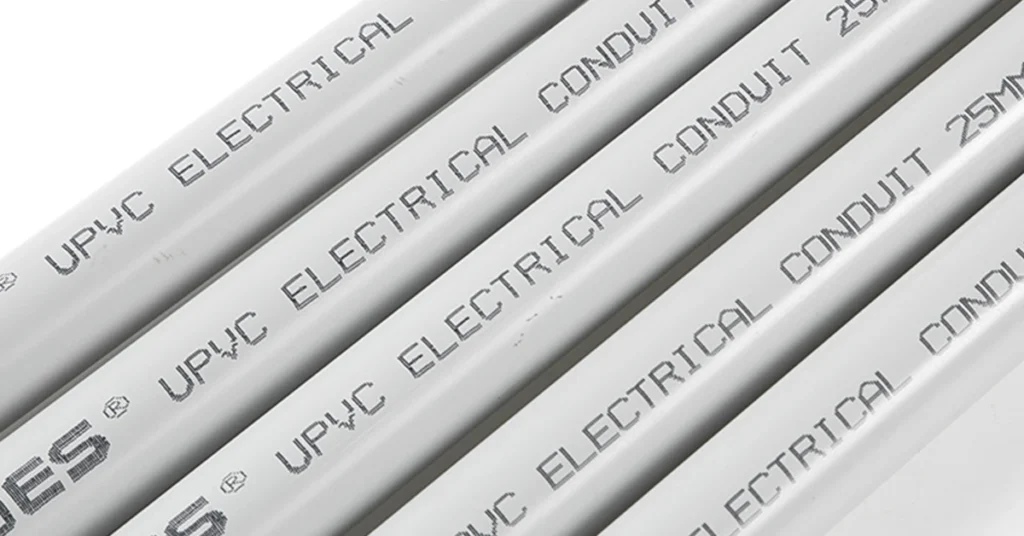
PVC-based materials are widely used in electrical conduit systems due to their corrosion resistance, lightweight construction, and ease of installation. In electrical applications, the specific formulation of PVC plays a critical role in determining performance, particularly under elevated temperatures or outdoor exposure. PVC conduits are generally available in both rigid and flexible forms to accommodate different installation requirements. The working temperatures from −5°C to +60°C (23℉ to 140℉).
Electrical-grade uPVC, or unplasticized polyvinyl chloride, differs from standard PVC in that it contains no plasticizers or only trace amounts below defined thresholds, which preserves rigidity and thermal performance. The working temperatures from -15°C to 105°C. (5℉ to 221℉).
To meet electrical and fire safety standards, uPVC compounds are further engineered with heat stabilizers, impact modifiers, and flame-retardant systems. Compared to plasticized PVC, uPVC maintains mechanical strength and dimensional stability under heat, reducing the risk of softening or deformation during service. Proper support spacing and installation practices remain essential to account for thermal expansion and long-term reliability.
Enhanced uPVC for Outdoor and Solar Applications
For outdoor and rooftop installations, additional environmental factors—particularly ultraviolet (UV) exposure—must be considered alongside temperature. In such applications, uPVC conduit formulations are often further optimized through the incorporation of UV-resistant additives. Based on industry practice and application experience, titanium dioxide (TiO₂) is commonly used within uPVC compounds as a UV-scattering and shielding agent, helping reduce ultraviolet-induced degradation of the polymer matrix and improve long-term surface stability.
For example, Ledes’s uPVC conduit systems, including solutions designed for solar and rooftop applications, incorporate titanium dioxide as part of their material formulation. This approach contributes to enhanced UV resistance and durability in sun-exposed environments, supporting reliable electrical protection when combined with appropriate thermal stabilizers and compliant installation practices.
2.2 Metal Conduit (EMT, IMC, RMC, and Flexible Metal Conduit) for High-Temperature Areas

When nonmetallic conduits such as uPVC reach their thermal limits, or when installations demand higher mechanical strength, fire resistance, or extreme temperature tolerance, metal conduit systems provide a robust solution. Metal conduits are available in both rigid and flexible forms, each with specific characteristics that influence performance under high-temperature conditions.
Rigid metal conduits include EMT (Electrical Metallic Tubing), IMC (Intermediate Metal Conduit), and RMC (Rigid Metal Conduit), and are widely used in industrial, commercial, and outdoor applications. The working temperatures from 200°C (392°F) to 450°C (842°F) or higher.
EMT – Lightweight and Cost-Effective
EMT is a thin-walled conduit typically made from galvanized steel or aluminum. Its lightweight construction allows easy handling and installation, while providing better thermal tolerance compared to nonmetallic conduits. EMT is suitable for environments with moderate mechanical loads and elevated ambient temperatures, but may require additional corrosion protection in aggressive or outdoor environments.
IMC – Intermediate Strength
IMC has thicker walls than EMT, offering higher mechanical strength and improved thermal performance. It is commonly used in industrial facilities and commercial buildings where higher temperatures, impact resistance, or potential fire exposure are expected. IMC provides a balance between weight, durability, and cost.
RMC – Maximum Strength and Extreme Thermal Performance
RMC features the thickest walls and can withstand the highest mechanical stress and thermal exposure. Ideal for industrial or outdoor installations with extreme temperatures, fire hazards, or heavy mechanical loads, RMC ensures maximum protection for conductors but is heavier and more labor-intensive to install.
In addition to rigid conduits, flexible metal conduits (FMC, LFMC, Greenfield) are available for applications requiring bending, vibration absorption, or limited installation space.
2.3 High-Performance Nonmetallic Conduits: HDPE and Fiberglass (FRP)

Beyond standard PVC and uPVC, high-performance nonmetallic conduits such as HDPE and fiberglass reinforced plastic (FRP) are used in applications demanding enhanced mechanical strength, chemical resistance, and environmental durability. HDPE is valued for its flexibility, toughness, and corrosion resistance, making it suitable for underground installations, duct banks, and outdoor routes with complex bends. However, HDPE requires careful consideration of thermal expansion and support spacing to maintain dimensional stability under heat stress. The working temperatures from −40°C to +80°C (-40℉ to 176℉).
FRP conduits combine glass fibers with a polymer resin, providing high rigidity, impact resistance, and excellent chemical stability. Naturally non-conductive, FRP conduits perform reliably in harsh environments with extreme temperatures or corrosive exposure. They are typically installed as rigid runs, with specialized cutting and joining techniques required to preserve mechanical integrity. FRP conduits complement HDPE and thermoplastics by offering high-strength, durable solutions for challenging installations.
2.4 LSZH Electrical Conduit (Low-Smoke Zero-Halogen)

LSZH (Low-Smoke Zero-Halogen) conduits are designed to enhance fire safety in installations where minimizing smoke and toxic gas emissions is critical, such as data centers, tunnels, industrial facilities, and public buildings.
These conduits maintain mechanical and thermal stability across a wide temperature range, allowing reliable performance in both cold and high-temperature environments. Available in rigid and flexible forms, LSZH conduits are engineered to comply with relevant fire safety and smoke emission standards, making them suitable for a broad range of demanding applications.
Ledes’s LSZH conduits are engineered from specialized thermoplastic compounds that produce minimal smoke and no corrosive halogen gases in the event of fire. This formulation ensures enhanced protection for both people and equipment, making LSZH conduits particularly suitable for areas where evacuation may be limited and where sensitive electronic or data infrastructure is present. The conduits are designed to maintain mechanical and thermal stability across a wide temperature range, from −45°C to +150°C (-49℉ to 302℉), making them reliable in both extremely cold and high-temperature environments.
2.5 9 Common Types Electrical Conduit Temperature Limited
Here the summary of t he 9 common types of electrical conduit temperature rang:
Conduit Material / Type | Typical Operating Temperature Range | Typical Applications |
PVC / uPVC Electrical Conduit | −5°C to +60°C (23℉ to 140℉) Ledes’s PVC and UPVC conduit have a temperature resistance range from -15°C to 105°C. (5℉ to 221℉) | Indoor wiring, outdoor installations, underground electrical systems |
Metal Conduit (RMC / IMC / EMT) | 200°C (392°F) to 450°C (842°F) or higher | Industrial facilities, mechanical rooms, exposed installations |
HDPE Conduit | −40°C to +80°C (-40℉ to 176℉) | Underground utilities, infrastructure, power and communication projects |
FRP / Fiberglass Conduit | −40°C to +110°C (-40℉ to 230℉) | Industrial plants, chemical facilities, corrosive environments |
قناة LSZH | −45°C to +150°C (-49℉ to 302℉) | Data centers, tunnels, enclosed public spaces |
* For metal conduit systems, temperature performance is typically governed by the conductor insulation rating rather than the conduit itself.
** FRP temperature capability varies significantly depending on the resin system and manufacturing process.
Notes
- The temperature ranges listed above are typical reference values compiled from publicly available material descriptions, industry standards interpretations, and manufacturer documentation.
- Actual conduit performance may vary depending on material formulation, additives, manufacturing process, wall thickness, and installation conditions.
- Different suppliers may specify different temperature ratings for similar conduit types.
- This table is intended for general comparison only. Always refer to official product datasheets, certifications, and applicable electrical codes when selecting conduit for high-temperature applications.
3. Key Factors to Consider When Choosing Conduit for High-Temperature Areas

Selecting the appropriate conduit for high-temperature environments requires understanding how heat affects both material properties and the electrical system. Elevated ambient temperatures, sunlight exposure, proximity to heat sources, and the thermal load of conductors all influence conduit performance. Materials that perform reliably under standard conditions may soften, deform, or lose mechanical strength when exposed to sustained heat, potentially compromising structural integrity and electrical safety.
Environmental factors such as UV exposure, chemical contact, moisture, and corrosive atmospheres also impact conduit performance. Conduit selection must therefore consider material behavior, installation conditions, expected service temperatures, and regulatory compliance. This chapter explores these factors, providing guidance for reliable, code-compliant conduit installations in high-temperature environments.
3.1 Temperature Effects on Conduit Performance
Temperature directly influences the mechanical, thermal, and dimensional properties of conduits. Thermoplastics like PVC, uPVC, HDPE, and LSZH may soften or lose rigidity under elevated temperatures, potentially affecting alignment and joint integrity. Metallic conduits, while generally more thermally tolerant, expand when heated, causing stress at joints and fittings. Direct sunlight, proximity to heat sources, and industrial heat loads can further exacerbate these effects, emphasizing the importance of proper material selection and installation practices to maintain long-term reliability.
3.2 Environmental Factors Affecting High-Temperature Conduit Selection
Environmental exposure—such as UV radiation, moisture, chemicals, and corrosive atmospheres—interacts with elevated temperatures to impact conduit performance. UV exposure can degrade thermoplastics, requiring UV-stabilized materials for outdoor installations. Chemical contact may accelerate material fatigue or reduce mechanical stability, making FRP a preferred option in harsh industrial environments. Moisture cycles and soil conditions in buried installations also affect thermal dissipation and long-term conduit performance. Assessing these environmental factors is essential for selecting materials that maintain mechanical integrity, thermal tolerance, and safety compliance.
3.3 Thermal Load and Conductor Considerations
The heat generated by electrical conductors themselves significantly affects conduit performance in high-temperature environments. Accumulated heat in crowded or long conduit runs can exceed ambient temperatures, impacting both conduit material and cable safety. Thermoplastic conduits risk softening or deformation, while metallic conduits may necessitate ampacity derating due to heat transfer. Proper conduit sizing, spacing, and material selection, combined with attention to load conditions, ensure both mechanical integrity and electrical safety.
3.4 Material Selection Guidelines for High-Temperature Areas

Choosing the right conduit material involves balancing mechanical integrity, thermal tolerance, environmental exposure, and fire safety. Thermoplastics like uPVC provide rigidity and heat resistance for moderate conditions, HDPE offers flexibility and chemical resistance, FRP ensures high-strength and corrosion stability, and LSZH adds fire-safe, low-smoke zero-halogen performance. Metallic conduits withstand high temperatures and impact but require consideration of thermal expansion and heat transfer. Proper installation practices—support spacing, bend radius, conduit fill, and routing near heat sources—complete the selection strategy, ensuring long-term performance, reliability, and code compliance in demanding high-temperature applications.
4. Conclusion
Choosing the right conduit for high-temperature environments is a critical decision that directly impacts electrical safety, mechanical integrity, and long-term reliability. Different materials—ranging from PVC and uPVC to metallic options, HDPE, FRP, and LSZH—offer distinct advantages and limitations depending on the installation conditions. Understanding the temperature ratings, thermal behavior, and environmental resistance of each conduit type is essential for making informed decisions.
When selecting conduit products, it is equally important to verify material formulations, temperature ratings, and applicable certifications with the supplier. Conduit performance can vary between manufacturers due to differences in raw materials, compounding processes, and quality control standards. Confirming technical datasheets, compliance with relevant codes, and suitability for the intended application helps ensure that the selected conduit delivers reliable performance under high-temperature conditions.
Environmental factors such as UV exposure, chemical contact, moisture, and corrosive conditions, combined with the thermal load of conductors, further influence the performance of conduits in demanding installations. Proper material selection, combined with careful consideration of support spacing, conduit fill, and routing near heat sources, ensures that conduits maintain dimensional stability, mechanical strength, and safety compliance throughout their service life.

At ليديس, we provide a range of PVC, uPVC, and LSZH electrical conduits, engineered to meet high-temperature and demanding environmental requirements. Our products are designed for reliability, compliance, and ease of installation across a variety of industrial, commercial, and specialized applications.
Thank you for reading—we hope this article is helpful. Wish you every success with your project, and if you have any project requirements, please feel free to contact us for professional support and solutions.
الأسئلة الشائعة
ما هي ممارسات التركيب الضرورية للأنابيب في البيئات ذات درجات الحرارة العالية؟
في التطبيقات ذات درجات الحرارة العالية، يُعدّ التركيب السليم ضروريًا للحفاظ على أداء المواسير. تشمل الاعتبارات الرئيسية التباعد الكافي بين الدعامات، ومراعاة التمدد الحراري، وتوجيه المواسير بعناية بعيدًا عن مصادر الحرارة المباشرة. قد تتعرض المواسير المعدنية وغير المعدنية لتغيرات في الأبعاد بفعل الحرارة، مما يجعل ممارسات التركيب الصحيحة بالغة الأهمية لضمان موثوقيتها على المدى الطويل.
هل ينبغي تعديل المسافة بين دعامات المواسير في التركيبات ذات درجات الحرارة العالية؟
نعم. قد تؤدي درجات الحرارة المرتفعة إلى تقليل صلابة المواد، خاصةً في المواسير المصنوعة من اللدائن الحرارية. ولمنع الترهل أو إجهاد الوصلات، قد يلزم تقليل المسافة بين الدعامات مقارنةً بالتركيبات القياسية. يجب دائمًا اتباع توصيات الشركة المصنعة وقوانين الكهرباء المعمول بها.
كيف تقيّم اختبارات الأداء موثوقية المواسير في ظروف درجات الحرارة العالية؟
يتم تقييم أداء المواسير في البيئات ذات درجات الحرارة العالية من خلال اختبارات القوة الميكانيكية، وتقييم التقادم الحراري، واختبارات مقاومة الحريق. تساعد هذه الاختبارات في التحقق من أن المواسير تحافظ على سلامتها الهيكلية، وثبات أبعادها، وخصائص السلامة بعد التعرض المطول للحرارة.
لماذا يُعد اختبار التقادم الحراري مهمًا لأنابيب التوصيل الكهربائية؟
تحاكي اختبارات التقادم الحراري التعرض طويل الأمد لدرجات حرارة مرتفعة، مما يسمح للمصنعين بتقييم التغيرات في القوة الميكانيكية والمرونة واستقرار المواد بمرور الوقت. وتُعد هذه الاختبارات بالغة الأهمية خاصةً بالنسبة للأنابيب غير المعدنية المستخدمة في المنشآت الصناعية أو الخارجية أو الكهربائية ذات الأحمال العالية.
كيف يختلف أداء مقاومة الحريق بين مواد المواسير في التطبيقات ذات درجات الحرارة العالية؟
تختلف خصائص مواد المواسير الكهربائية في ظروف الحريق. فالمواسير المعدنية لا تحترق، ولكنها تنقل الحرارة، بينما قد تلين المواد البلاستيكية الحرارية أو تتشوه. أما مواسير LSZH، فهي مصممة لانبعاث أقل قدر من الدخان، ولا تنبعث منها غازات الهالوجين، مما يُحسّن السلامة في الأماكن المغلقة أو ذات الكثافة السكانية العالية.
